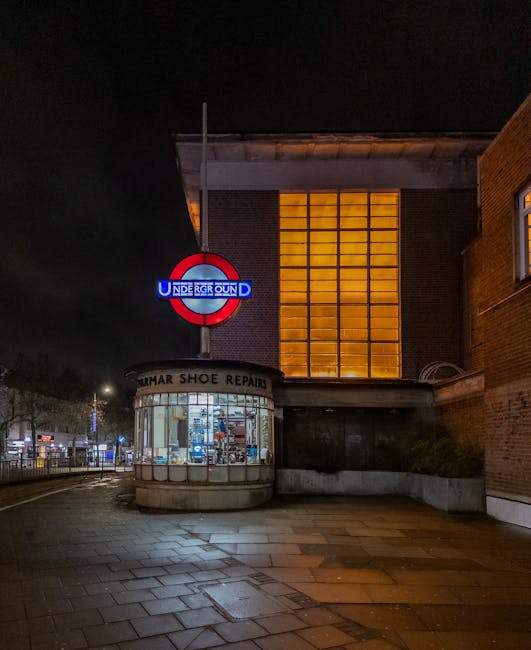
Uxbridge Tube Station Access Guide for Removal Vans
If you are planning a move near Uxbridge Tube station, the access side of the job can be just as important as the packing. A removal van can make a perfectly smooth move feel chaotic if you turn up at the wrong time, choose the wrong stopping point, or underestimate how busy the station area gets. This Uxbridge tube station access guide for removal vans is designed to help you avoid that sort of headache.
In plain English: you need a plan for where the van can stop, how long it can stay, how to move items safely through a busy public space, and what to do if the layout, traffic, or access conditions are less straightforward than expected. That applies whether you are moving a studio flat, a family home, or a small office. Let's face it, the hardest part is often not lifting the boxes. It is getting the van in, getting it loaded, and getting out without delay.
This guide walks through the practical realities, the common mistakes, the best ways to prepare, and the decision points that matter most. You will also find a checklist, a comparison table, and a few real-world examples to help you plan confidently.
Why Uxbridge Tube Station Access Matters
Access around a tube station is never just about distance on a map. It is about the reality on the ground: one-way roads, pedestrians stepping off the pavement without warning, taxi movements, delivery vehicles, and the general stop-start rhythm of a busy transport hub. Around Uxbridge Tube station, that matters even more because moving day timing, safe loading, and keeping the van close to the property can all affect how long the job takes.
If you are moving from a flat near the station, a few extra minutes of walking each load can become a serious time drain. A sofa that should have taken one careful trip may become three awkward ones. And if the van cannot stop where you hoped, your team may need to carry items further than expected. That is where a good access guide saves money, stress, and bruised knuckles.
There is also a trust angle here. When people hire a removal van, they are not only paying for transport. They are paying for judgment, route planning, and calm decision-making when the street is tight or the station area is busy. That is especially true for moves that rely on a man with van approach, where one vehicle and one or two people need to work efficiently from the first trip to the last.
In our experience, access problems rarely arrive as dramatic surprises. They show up as small delays: a parking bay that is already occupied, a loading spot that is too far away, a doorway that swings awkwardly into the path, or a lift that is slower than everyone hoped. Small things. But they add up fast.
How Uxbridge Tube Station Access Guide for Removal Vans Works
The goal is simple: position the van as close as possible to the property while staying within the practical limits of local access, safety, and any stopping restrictions. The guide is not about guessing. It is about checking the approach in advance, then matching the vehicle size and move plan to the space available.
Here is the basic flow:
- Identify the property's exact relationship to the station area.
- Check whether the van can stop nearby without blocking traffic or creating a safety issue.
- Work out whether the move needs a small vehicle, standard van, or a larger truck.
- Decide how items will be carried from the door to the vehicle.
- Build in extra time for loading, stairs, lifts, or narrow access points.
That might sound straightforward, and sometimes it is. A ground-floor move on a quiet side street can be very manageable. But the station zone can change everything. A morning move may be fine if traffic is lighter; later in the day, the same route can feel far less forgiving. This is where services like man and van or a larger moving truck need to be chosen with the access conditions in mind, not just the number of boxes.
A practical access guide should also consider the type of move. A student relocation near the station, for instance, often involves fewer bulky items but tighter timing. A family move may have more furniture and more fragile pieces. A business move may need less domestic clutter but more planning around opening hours and staff access. Different job, different rhythm.
Key Benefits and Practical Advantages
Good access planning around Uxbridge Tube station gives you more than convenience. It reduces wasted time, lowers handling risk, and keeps the move calmer for everyone involved. That calm matters. If you have ever moved on a wet Tuesday morning with people stepping around boxes and a van waiting at the kerb, you will know exactly what I mean.
- Shorter carrying distance: fewer steps between property and vehicle means less lifting and lower fatigue.
- Better vehicle choice: the right van size can be matched to the actual access constraints.
- Fewer delays: advance planning helps avoid last-minute parking confusion.
- Safer handling: less rushing, fewer awkward turns, and a lower chance of bumping walls, doors, or furniture.
- Cleaner scheduling: a well-planned move is easier to coordinate with neighbours, building managers, or office teams.
There is also a broader commercial benefit. If you are comparing providers, the companies that ask detailed access questions tend to be the ones that take the job seriously. They are usually thinking about efficiency and safety, not just getting the booking. That is a good sign. It may not sound glamorous, but it saves a lot of fuss.
For bigger domestic jobs, you may also want to consider whether removals support, home moves, or even flat removals are the right fit. Access near a station can make the difference between a very ordinary move and one that needs careful sequencing from start to finish.
Who This Is For and When It Makes Sense
This guide is useful for anyone moving near the station, but it is especially relevant for a few groups. First, flat dwellers. Station-adjacent flats often come with limited parking, tighter entrances, and shared access. Second, students. They may have less to move, but they usually need speed and affordability. Third, small businesses. Office closures and handovers rarely leave much room for error.
It also makes sense if you are simply trying to keep a move predictable. Maybe you have a baby napping schedule to work around. Maybe you are moving after work and need the van to be loaded quickly before dark. Or maybe you are dealing with a last-minute change and want the whole thing to feel less like a scramble. Truth be told, a good access plan helps all of those situations.
For more tailored planning, some people will pair the access guide with a broader moving service such as student removals, office removals, or house removals. Others may only need a light-touch option like man with a van when the item count is low and the access is manageable.
And yes, sometimes people overthink it. Other times they underthink it. The sweet spot is somewhere in the middle: enough preparation to prevent surprises, but not so much that the whole move becomes a spreadsheet exercise.
Step-by-Step Guidance
Below is a practical way to plan access around Uxbridge Tube station without making the process more complicated than it needs to be.
- Map the exact property access.
Check the doorway, hallway, stairs, lift, and any shared entrance points. The trick is to understand the full route from room to van, not just the front door. - Measure bulky items.
Sofas, wardrobes, beds, and white goods are the usual troublemakers. If something is awkward before moving day, it will not magically become easier at 7:30 in the morning. - Assess the vehicle size.
A smaller van may be better if the street is tight or stopping space is limited. A larger truck can be efficient for bigger jobs, but only if the access really supports it. - Check where the van can wait.
The most useful stopping point is not always the nearest one. It is the one that allows safe loading without blocking the flow of traffic or creating conflict with pedestrians. - Build a loading sequence.
Put the heaviest and least delicate items in first, then work forward with the rest. Keep essentials to one side so you are not digging through the van for keys, chargers, or documents later. - Plan for timing.
Busy travel periods can affect the area around the station, and even a modest delay can change your whole schedule. Start earlier than you think you need to. Honestly, that advice has saved more moves than any fancy gadget. - Protect the building and the van.
Use blankets, straps, and corner protection. If you are carrying furniture through narrow routes, a small scrape can happen very quickly. - Keep communication open.
If the van arrives and access is different from expected, the team needs to decide quickly whether to reposition, adjust the load order, or use a different approach.
If you are unsure whether a job needs more than a basic van service, it may be worth comparing removal services with a dedicated removal truck hire option. The right choice depends less on "best" in the abstract and more on what the road, pavement, and property actually allow.
Expert Tips for Better Results
A few details tend to make the biggest difference. First, always think in terms of carrying distance. Five metres does not sound like much, but over several trips it changes the feel of the day. Second, ask about loading order before the van is packed. Third, keep the first-hour items together: kettle, documents, basic tools, phone charger, and anything else you will want immediately on arrival.
Here are a few field-tested tips that help around station-side moves:
- Arrive earlier than the load window. It gives you time to check the stopping point and avoid a rushed start.
- Use a spotter if space is tight. One person guiding the driver can prevent awkward manoeuvres.
- Leave one clear path inside the property. Boxes stacked across a hallway slow everything down. A lot.
- Separate fragile items early. Do not leave delicate pieces until the final ten minutes.
- Keep building keys and access codes close. Moving day has a funny way of exposing what was forgotten.
For some moves, especially when there is a lot of furniture to shift or dispose of, it helps to think beyond transport. Services like furniture removals or even furniture pick up can reduce clutter before the main move, making the access job cleaner and faster. That is particularly useful in flat buildings where shared corridors and lifts are already working hard enough.
A small human note here: people often assume that "more van" equals "better move." Not always. Sometimes the right answer is a slightly smaller vehicle that can stop legally and safely without turning the morning into a traffic puzzle.
Common Mistakes to Avoid
The most common mistake is assuming there will be space because "it usually seems fine." Usually is not a plan. Another one is forgetting to check whether the van can get close enough for sensible loading. That sounds obvious, but on moving day obvious things are the first to disappear.
- Ignoring peak-time congestion: station areas can become much busier at certain times of day.
- Choosing the wrong van size: too large can be awkward; too small can mean repeated trips and more lifting.
- Not protecting access points: doorframes, stair edges, and walls can get damaged easily during rushed carrying.
- Leaving unpacked items everywhere: this slows the loading chain and causes avoidable confusion.
- Forgetting about neighbours or building rules: shared spaces often need a bit of courtesy and forewarning.
Another mistake is underestimating how tiring station-area moves can be. A short carry repeated twenty times is still work. Add a wet pavement, a narrow turn, or a lift that holds people up, and the day can feel much longer than expected. Nobody wants that. Well, almost nobody.
If your move is part of a wider relocation, check whether commercial moves or office relocation services would fit better than a basic transport-only booking. The wrong service choice is a classic time-waster.
Tools, Resources and Recommendations
You do not need a box full of fancy kit to handle access well, but a few basics make a real difference. A tape measure helps with furniture and doorway checks. Furniture blankets and straps help prevent damage. A hand trolley or sack barrow can be useful for boxes and appliances, provided the route is suitable. And a simple written plan is still underrated. Old-fashioned, yes. Effective, absolutely.
Useful things to have ready include:
- tape measure for furniture and access points
- blankets or covers for awkward furniture
- strong tape and labels for clear box marking
- basic toolkit for dismantling and reassembly
- phone charger and backup contact details
- drinking water, especially on warm days or long jobs
Some moves also benefit from short-term holding space. If access is limited at one end, or completion timings do not line up neatly, storage can be a sensible buffer. It takes a bit of pressure off. Similar logic applies if you are moving a few pieces of furniture separately and want to stage the job more gently.
For people comparing providers, it is also worth looking at company standards around health and safety, insurance and safety, and recycling and sustainability. Those pages do not make the move itself easier, but they do tell you something useful about how the company thinks.
Law, Compliance, Standards and Best Practice
When moving near a busy station, you should always follow the practical rules of the road and the site, even if the move feels small. That means observing any parking or stopping restrictions, avoiding dangerous obstruction, and making sure lifting and carrying is done safely. If you are hiring a provider, they should have sensible insurance coverage and a clear approach to risk management.
UK moving jobs often sit at the intersection of common sense and formal duty of care. No one wants to overstate it, but there is a real difference between "we should be fine" and "we checked the route, the access, and the risks." The second approach is the professional one.
Best practice usually includes:
- planning the route and stopping point before moving day
- making sure items are handled by suitable people and equipment
- keeping walkways clear where possible
- preventing damage to shared spaces and the vehicle
- being flexible if access conditions differ from the original plan
If you are comparing providers, it is reasonable to review their terms and conditions and their approach to payment and security. For many customers, that is not the exciting part. But it is the part that helps avoid disappointment later. A move is stressful enough already.
Options, Methods, or Comparison Table
Different access situations call for different moving methods. The table below gives a quick, practical comparison.
| Option | Best for | Strengths | Limitations |
|---|---|---|---|
| Small van / man with a van | Light moves, quick turnarounds, tight access | Flexible stopping, easier in narrow streets, usually efficient for short carries | Less capacity for larger households or bulky furniture |
| Standard removal van | Typical home moves and flat relocations | Good balance of space and manoeuvrability | May still struggle if the road is very restricted |
| Larger moving truck | Bigger homes, fuller loads, more trips to avoid | Higher capacity, better for full-day moves | Can be harder to position near busy station access |
| Removal service with packing support | Time-sensitive or fragile moves | Better organisation, reduced stress, fewer last-minute surprises | May cost more than transport-only help |
There is no single winner. The best option depends on access, timing, and the amount of furniture involved. A move from a compact flat near the station may be ideal for a smaller vehicle. A larger domestic relocation might need a fuller removal services package. Simple as that, really.
Case Study or Real-World Example
Here is a realistic example. A couple moved out of a second-floor flat near Uxbridge Tube station with a mix of boxes, a bed frame, two wardrobes, and a dining table. The first plan was to use the nearest stopping point, but after checking the route the team realised it would cause an awkward carry through a busier pedestrian stretch. Instead, they chose a slightly less convenient stopping spot that gave them a safer loading line and less conflict with foot traffic.
The result was not dramatic. No miracle. No heroics. Just a calmer day. The crew loaded the heaviest items first, kept the access path clear, and made sure the van sat where it could be reached without blocking the entrance. One wardrobe had to be partially dismantled on the landing, which was mildly annoying, but far better than trying to wrestle it through the doorway in one piece.
That is the lesson, really: good access planning is usually invisible when it works. You just notice that the day feels more orderly, less hurried, and strangely less noisy. Boxes land where they should. People stop asking where the tape measure is. The kettle appears at the right time. A small victory, but a real one.
Practical Checklist
Use this checklist before moving day. It is short, but it catches a lot of avoidable problems.
- Confirm the full address and exact access route.
- Measure doors, hallways, stairs, and bulky furniture.
- Choose the right vehicle size for the street and load.
- Decide where the van will stop and how long it can remain there.
- Pack fragile items securely and label them clearly.
- Keep essentials separate for immediate access after arrival.
- Protect walls, doorframes, and flooring if needed.
- Check whether storage is needed for timing gaps.
- Review safety, insurance, and moving terms before the day.
- Allow more time than your optimistic self thinks is necessary.
If the move is large or awkward, it may also be worth arranging packing and boxes support so the loading process is cleaner from the outset. Good packing makes bad access far easier to live with. That sounds simple because it is.
Conclusion
Moving near Uxbridge Tube station is very manageable when the access plan is realistic. The key is to stop thinking only about the destination and start thinking about the route from front door to van. Once you do that, a lot of stress drops away. The move becomes a sequence of small, sensible actions rather than one big scramble.
Whether you are handling a flat move, a family relocation, a student move, or a small commercial job, the same principles apply: check access, choose the right vehicle, protect the space, and leave room for the unexpected. Because there usually is one little unexpected thing. There always is, to be fair.
If you want help choosing the right moving setup, comparing vehicle options, or planning the job around local access constraints, it helps to speak with a team that deals with these situations day in, day out.
Get a free quote today and see how much you can save.
Frequently Asked Questions
Can a removal van stop near Uxbridge Tube station easily?
Sometimes yes, sometimes no. It depends on the exact street, the time of day, and whether nearby stopping space is available. The safest approach is to plan the access route before moving day rather than assume there will be room on arrival.
What size van is best for a move near the station?
That depends on the amount of furniture and how tight the access is. A smaller van can be easier to position near a station area, while a larger van or truck may be better for bigger loads if the road layout allows it.
How do I know if my flat has difficult access?
Look at the full route from the front door to where the van can stop. Narrow hallways, stairs, shared entrances, long carrying distances, and limited parking are all signs that the access may be more complex than it first appears.
Is a man with a van enough for a station-side move?
For lighter moves, yes, it can be a very good fit. For larger households or awkward furniture, you may need a fuller removal service or a bigger vehicle. It is less about the label and more about the load and access.
Do I need storage if the access is difficult?
Not always, but storage can help if moving dates do not line up neatly or if you need to stage the move in smaller parts. It is especially useful when access problems make a single-day move unrealistic.
What should I pack first for a move near the station?
Pack non-essentials first and keep daily-use items separate. Essentials such as chargers, documents, basic toiletries, tea bags, and a change of clothes should be easy to reach once you arrive.
Are station-area moves more expensive?
They can be if access is tight, the carry distance is long, or the job takes more time than a straightforward move. The best way to keep costs sensible is to provide accurate access details up front so the job can be priced properly.
What if the van cannot park right outside the property?
Then the team may need to park at the nearest safe and legal stopping point and carry items the remaining distance. That is normal enough in busier areas, but it should be planned rather than discovered on the day.
Should I book packing help as well as transport?
If the move includes fragile items, tight deadlines, or a lot of boxes, packing support can make the whole process smoother. It also helps reduce the chance of slow loading caused by awkward or weak boxes.
How far in advance should I arrange access details?
As early as possible. Even when the move itself is simple, access details can change the vehicle choice, the timing, and the amount of labour needed. Early planning usually saves effort later.
What if my move is urgent and I have little time to plan?
Then prioritise the essentials: exact address, access route, load size, and stopping point. A same-day or short-notice move can still work if the basics are clear. You may want to look at same day removals if speed is the main issue.
Can I combine furniture disposal with my move?
Yes, often you can. If you have items you do not want to take with you, arranging furniture removals or a targeted furniture pick up can reduce the load and simplify access on moving day.
What should I ask a removal company about station access?
Ask what vehicle they recommend, where they expect to stop, how they handle narrow access, and whether they need any extra details in advance. A good company will usually ask sensible questions back, which is exactly what you want.